Regulation & MiCA
MiCA, licensing and tax rules across the Baltics and Nordics, explained clearly.
22 articles
MiCA explainer
CASP Register 22.08.2026: Regional Growth Stalls
An explanatory note for the Baltic and Nordic segment: The ESMA MiCA register is growing to ~325-329 CASPs overall, but regional growth has stalled in recent weeks, while new additions are driven by German banks via Article 60 notifications.
As of mid-August, the ESMA MiCA register contains approximately 325-329 CASPs, but net growth is modest and primarily driven by German credit institutions (Article 60 notifications), not crypto exchanges. No new CASPs have been added in the Baltics and Nordics since June-July. This explanation includes snapshot dates and a caveat regarding tracker lag.
toms-abeltins· 22 Aug 2026· 5 min readMiCA explainer
Crypto Card Taxes 18.08.2026: Spending as a Transaction
An explanation for the Baltics and Nordics: why every crypto card payment is an asset disposal with tax implications, and how this differs across the LV, LT, EE, FI, SE, NO, and DK markets.
There have been no clearly dateable new developments in our segment over the past 24 hours, so we offer a practical explanation that intertwines crypto cards and tax tools: throughout the Baltics and Nordics, spending crypto is an asset disposal, and the card generates dozens of small taxable transactions. Includes a country-by-country rate overview and a watchlist.
toms-abeltins· 18 Aug 2026· 7 min readMiCA explainer
Estonian CASP Licences 17.08.2026: Slow Progress
Explainer: why Estonia, historically the largest Baltic crypto licensing jurisdiction, is cautiously issuing MiCA CASP authorisations - process, deadlines, capital requirements, and what it means for users in the region.
There have been no clearly dateable new developments in our segment (exchanges/CASPs, hardware wallets, cards, tax tools) in the last 24 hours. Therefore, today we offer an explanation on an ongoing topic: Estonia's slow pace of CASP authorisation following the end of the MiCA transition period on 1st July - the process, deadlines, capital requirements, and its significance for Baltic and Nordic users.
toms-abeltins· 17 Aug 2026· 7 min readMiCA explainer
MiCA Register 14.08.2026: Banks Overtake Exchanges
An explanation for the Baltic and Nordic segment: six weeks after the MiCA deadline, the ESMA register lists 321 CASPs, but new additions are driven by banks, not crypto exchanges. What this means for users in the region.
In the last 24 hours, there have been no new clearly dated events in our segment. Therefore, we offer an explanation on an ongoing topic: the MiCA register contains 321 CASPs (data as of early August), and recent updates are dominated by banks, not exchanges, thanks to Article 60 notification procedures. Includes a regional CASP map and watchlist.
toms-abeltins· 14 Aug 2026· 7 min readMiCA explainer
Coldcard entropijas kļūda 10.08.2026: self-custody riski
Skaidrojums: kāpēc viena programmaparatūras build-karodziņa kļūda samazināja Coldcard maku sēklu entropiju, kāpēc "bezsaistē" nenozīmē "drošībā", un ko tas maina Baltijas un Ziemeļvalstu pašglabāšanas lietotājiem.
Coldcard aparatūras maku incidents nav ne fiziska ielaušanās, ne pikšķerēšana, bet gan viena programmaparatūras konfigurācijas kļūda, kas sēklu entropiju samazināja līdz ~40–72 bitiem un padarīja atslēgas praktiski aprēķināmas. Skaidrojums par to, ko tas māca par pašglabāšanas uzticēšanās pieņēmumiem, kāpēc MiCA neaptver self-custody firmware, un praktisks rīcības saraksts reģiona lietotājiem.
toms-abeltins· 10 Aug 2026· 7 min read
MiCA explainer
Canada's MSB vs. MiCA 31.07.2026: What it Means for the Baltics
Explanation: Post-MiCA, some exchanges are opting for Canadian FINTRAC MSB registration. Here's why it's not equivalent to an EU licence and what it practically means for Baltic and Nordic users.
Following the full implementation of MiCA in 2026, some crypto exchanges and currency exchange services that haven't obtained an EU licence are relocating their legal entities to Canada and registering as a Money Services Business (MSB) with FINTRAC. This explanation clarifies why a Canadian MSB is an AML registration with a low barrier to entry, not a prudential licence; why it doesn't authorise serving EEA clients (due to ESMA's narrowly interpreted reverse solicitation exception); why major players still opt for MiCA - often via the Baltics; and how Baltic and Nordic users can verify if a service provider is on the EU CASP register. Company names are not mentioned.
toms-abeltins· 31 Jul 2026· 9 min read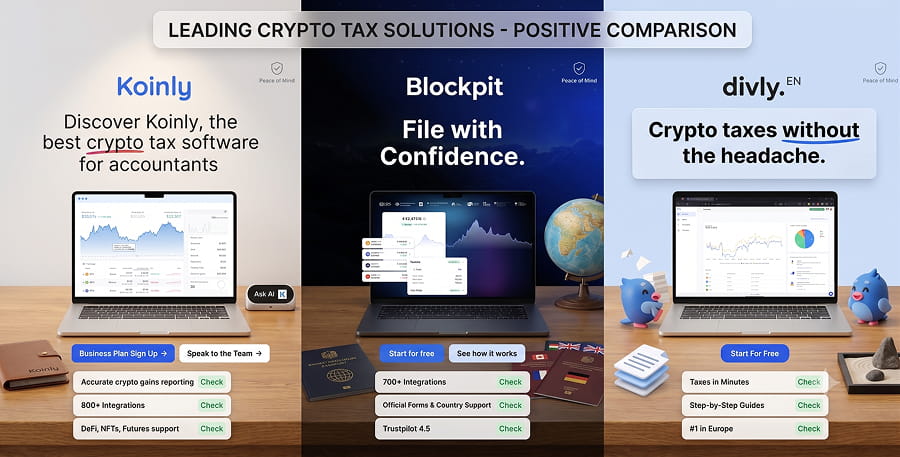
MiCA explainer
Crypto Tax Tools 31.07.2026: Koinly, Blockpit, Divly
Friday, 31st July: there are no fresh primary events in the segment that can be dated individually, so here's a practical explanation - how a Baltic and Nordic user can choose a crypto tax tool in the era of DAC8/CARF.
The regional industry news flow is quiet this week, so this is an honestly dated explanatory article on crypto tax tools for Baltic and Nordic users. We look at why DAC8 and CARF data collection from 1st January 2026 makes accurate record-keeping almost mandatory, and compare three main tools - Koinly, Blockpit, and Divly - by integrations, pricing, and country form support. We specifically highlight the Baltic (LV, LT, EE) situation, where localised forms are lacking, and offer a practical approach to choosing.
toms-abeltins· 31 Jul 2026· 8 min readMiCA explainer
MiCA Rejection Appeal 25.07.2026: Lessons from Goobit
An explainer, not daily news: How the MiCA authorisation rejection appeal mechanism works for Nordic and Baltic exchanges, using the Goobit (BTCX) case as the first practical precedent.
There have been no new primary events in the last 24 hours, so we're providing an in-depth explanation of an ongoing topic: what happens when a national supervisor rejects a MiCA licence application, and how an exchange can appeal it. Goobit AB's (BTCX) 23rd July appeal against the Swedish Finansinspektionen's 2nd July rejection serves as the first Nordic precedent; a review of regional supervisors and a watchlist are also included.
toms-abeltins· 25 Jul 2026· 6 min readMiCA explainer
Crypto Cards 23.07.2026: Baltics and Nordics
Thursday, 23rd July: No primary event to report in the last 24 hours, so this is an explanatory article on crypto cards in the Baltic and Nordic markets. We cover the impact of MiCA e-money tokens, issuer authorisations, fees, and tax implications.
In the last 24 hours (22nd-23rd July), there have been no new primary developments in the Baltic and Nordic crypto exchange, CASP, hardware wallet, card, and tax tool segments. Therefore, this is an accurately dated explanatory article on an ongoing topic: crypto cards serving users in LV, LT, EE, FI, SE, NO, and DK in 2026. We examine how the MiCA e-money token (EMT) regime, effective from 30th June 2024, impacts stablecoin-backed cards, which issuers (Crypto.com, Kraken Krak, Bybit EU, etc.) with EU authorisations serve the region, how to compare total fees and euro settlements, and why spending with a card is a taxable disposal in most countries within the context of DAC8/CARF reporting.
toms-abeltins· 23 Jul 2026· 7 min readMiCA explainer
DAC8 and CARF 22.07.2026: Crypto Tax Reporting
Tuesday, 22nd July: No primary event to report in the last 24 hours, so here's an explanatory article on DAC8/CARF. From 01.01.2026, crypto service providers will collect tax data; first reporting in 2027. Baltic and Nordic map.
In the last 24 hours (21st-22nd July), there have been no specific primary updates in the Baltic and Nordic crypto exchange, CASP, hardware wallet, card, and tax tool segments. Therefore, this is an explanatory article on an ongoing topic: DAC8 (Council Directive (EU) 2023/2226, adopted 17.10.2023) and the OECD CARF framework for crypto-asset tax reporting. From 1st January 2026, crypto-asset service providers (RCASPs) will collect user and transaction data; the first reports to national authorities are due in early 2027 (in Estonia by 30.06.2027), with international exchange by 30.09.2027. In Latvia, amendments to the law "On Taxes and Fees" were published on 21.11.2025 (penalties up to 14,000 euros, partial implementation). Norway is not subject to DAC8 and is implementing CARF directly through Skatteetaten.
toms-abeltins· 22 Jul 2026· 7 min readMiCA explainer
Reverse solicitation MiCA 19.07.2026: EU client boundary
An in-depth explanation of the MiCA Article 61 reverse solicitation exception and ESMA guidelines - can Baltic and Nordic users still use non-EU based exchanges after the end of the transitional period on 1 July and the framework's completion on 28 July.
Following the end of MiCA's transitional period on 1 July, many Baltic and Nordic users are asking: can I still use my non-EU based exchange? The answer lies in the MiCA Article 61 reverse solicitation exception, which ESMA guidelines deliberately make very narrow. This explanation outlines what users and service providers are permitted to do, and why 28 July is an important date.
toms-abeltins· 19 Jul 2026· 8 min readMiCA explainer
MiCA CASP Staff Competence 28.07.2026
Explanation and Watchlist: What Changes on 28 July, to Whom ESMA's Knowledge and Competence Guidelines Apply, and What Baltic and Nordic CASPs Must Achieve by the Deadline.
There have been no significant new regulatory developments in our segment over the past 24 hours. This explanatory article covers the next MiCA deadline: 28 July, when ESMA's guidelines on the knowledge and competence of CASP staff (ESMA35-1872330276-2380) come into force, affecting all licensed Baltic and Nordic exchanges.
toms-abeltins· 17 Jul 2026· 6 min read